
“Big Promises, Bigger Problems: The Dark Side of the Handwriting Recognition Market”
“Uncovering the hidden risks, challenges, and overlooked realities behind handwriting recognition’s rapid growth forecasts.”


Introduction
Handwriting is one of humanity’s oldest communication tools, and for centuries, it was the standard for recording thoughts, knowledge, and official records. In the digital age, however, typed input, voice recognition, and touchscreen interfaces have largely replaced pen and paper. Handwriting recognition (HWR) a branch of artificial intelligence and pattern recognition emerged with the promise of bridging these two worlds. By automatically converting human handwriting into machine-readable text, it enables automation in education, healthcare, enterprise document management, and even automotive interfaces.
Analysts project extraordinary growth for the handwriting recognition market. For example, reports such as Credence Research forecast the global market expanding from USD 1.27 billion in 2024 to USD 3.29 billion by 2032, growing at a compound annual growth rate (CAGR) of over 12%. These numbers are attractive to investors, startups, and enterprises, suggesting a sector ripe with opportunities.
But beneath the optimism lies a set of complex problems. The handwriting recognition market is not a straightforward success story. It faces accuracy issues, cultural barriers, regulatory risks, ethical questions, and economic hurdles that could limit its adoption. If these challenges are not addressed, the industry may fall short of its grand promises.
This article explores the dark side of the handwriting recognition market: the overlooked difficulties, the barriers to scaling, and the unintended consequences of rushing adoption. While the technology is innovative, the story is far more complicated than the hype suggests.
Source:
https://www.credenceresearch.com/report/handwriting-recognition-hwr-market
1.The Promise of Handwriting Recognition
1.1 Defining Handwriting Recognition
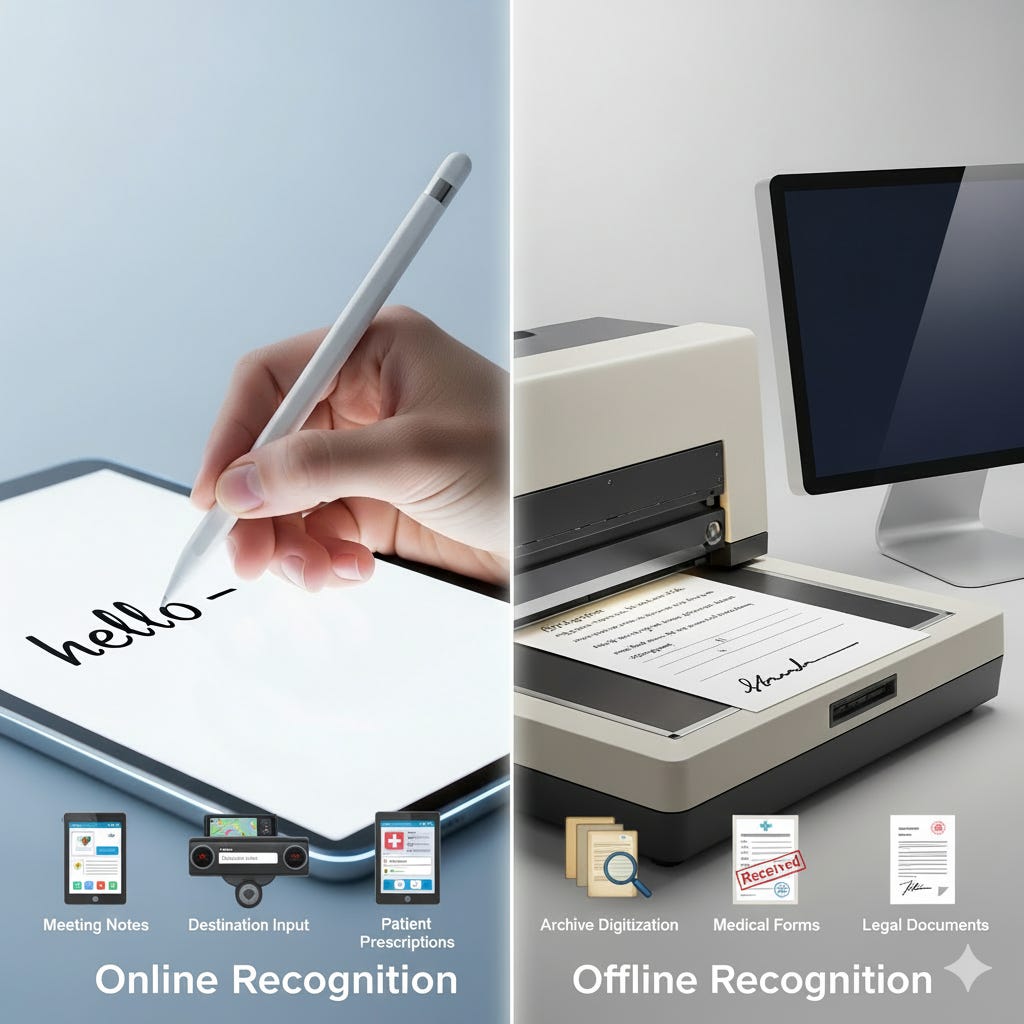
Handwriting recognition is the process by which software interprets handwritten input captured via stylus, touchscreen, or scanned paper documents and converts it into digital text. Two types exist:
Online Recognition: Real-time input on digital devices, such as tablets or smartphones, using a stylus or finger.
Offline Recognition: Conversion of static, scanned images of handwriting into text, often via OCR-like techniques.
1.2 Where It Is Supposed to Help
The promises of handwriting recognition are compelling:
Education: Digital grading of handwritten exams, enabling instant feedback.
Healthcare: Digitization of doctors’ notes and prescriptions for more efficient record-keeping.
Enterprise: Processing handwritten forms and contracts to reduce data entry labor.
Automotive: Enabling drivers to input commands or fill digital forms using stylus handwriting instead of touch keyboards.
1.3 Drivers of Market Optimism
Industry reports highlight several tailwinds fueling adoption:
Explosion of smart devices with stylus support.
Rising demand for intelligent document processing.
Advances in AI/ML models for natural language and image processing.
Push for automation in data-intensive sectors.
Increasing global digitization initiatives, especially in Asia-Pacific.
On the surface, these trends suggest a technology set for mass adoption. Yet the reality is more nuanced.
2. Accuracy Limitations and Technical Challenges
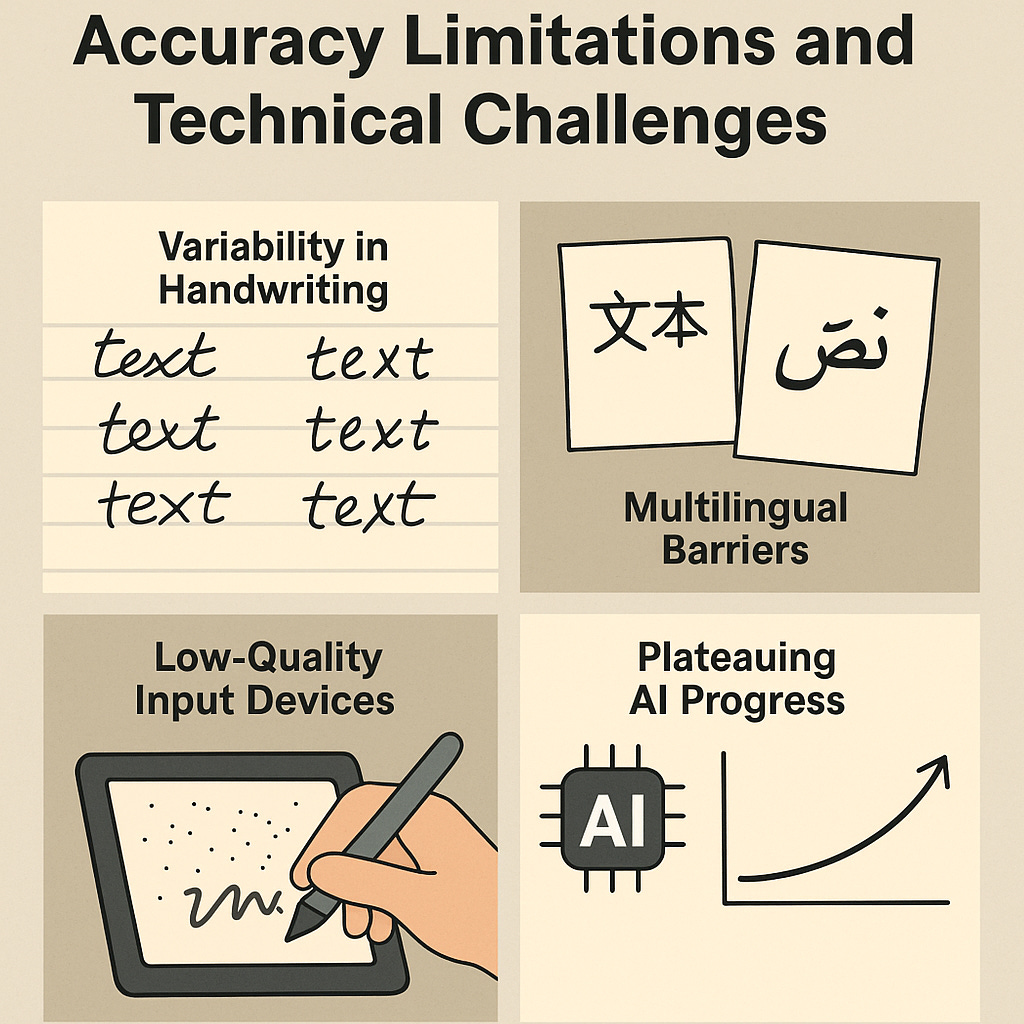
2.1 Variability in Handwriting
Unlike typed text, handwriting is deeply personal. People differ in slant, size, pressure, spacing, and style. Some use cursive, others print. Many mix both. Cultural nuances make it worse: scripts like Arabic, Chinese, or Devanagari are complex, with ligatures and diacritics that vary widely between individuals.
Even advanced AI models often falter under these variations. While machine learning has improved recognition rates, error rates of 3–5% in English still translate into significant mistakes in high-stakes industries like healthcare or legal documentation.
2.2 Multilingual Barriers
Most progress has been made in Latin-script languages. Non-Latin scripts especially those with vast character sets (Chinese, Japanese) or complex cursive rules (Arabic, Urdu) face severe accuracy issues. In multilingual societies like India, documents often mix English with regional languages, compounding the problem.
2.3 Low-Quality Input Devices
The success of online HWR depends on high-quality sensors. Low-cost devices in emerging markets often have poor stylus resolution, latency, or inadequate pressure sensitivity. Offline recognition struggles with smudged scans, poor lighting, or degraded paper quality.
2.4 Plateauing AI Progress
Machine learning thrives on data, but acquiring diverse handwriting datasets is expensive, privacy-sensitive, and limited by cultural reluctance. Without robust datasets, improvements in recognition accuracy may plateau making it harder to justify investments in complex applications.
3. Economic and Cost Barriers
3.1 High Development and Integration Costs
Developing robust HWR systems is not cheap. Enterprises need to invest in:
Expensive AI models requiring large-scale training.
Licensing fees for software.
Specialized hardware (stylus devices, high-resolution scanners).
Integration into existing IT infrastructure.
For small and medium-sized enterprises (SMEs), these costs are prohibitive.
3.2 Limited ROI in Many Sectors
In education, digitizing exams may save grading time but requires costly deployment across thousands of schools. In healthcare, transcription errors may create liabilities rather than savings. ROI is far less compelling when factoring in training, device costs, and maintenance.
3.3 Price Sensitivity in Emerging Markets
Forecasts assume rapid adoption in Asia-Pacific and Latin America. Yet in many regions, affordability remains a barrier. Schools and clinics in rural areas may lack the funds to implement HWR solutions, making adoption slower than projections suggest.
4. Privacy, Security, and Ethical Concerns

4.1 Data Privacy Issues
Handwriting often contains personal information signatures, names, medical details, or legal statements. Digitizing this information raises concerns about storage, consent, and potential misuse.
4.2 Data Breaches
Cloud-based HWR solutions, while scalable, are vulnerable to cyberattacks. A compromised system containing millions of handwritten records could expose sensitive personal and institutional data.
4.3 Consent for Training Data
AI requires massive handwriting datasets. Collecting them means using personal handwriting samples sometimes without explicit consent. This raises ethical concerns, particularly in regions with weak data protection laws.
4.4 Misuse of Technology
There are darker implications too. Handwriting data could be used to reconstruct biometric signatures, posing fraud risks in banking and legal contexts. In authoritarian regimes, handwriting recognition might enable surveillance of dissenters.
5. Adoption and User Behavior Challenges
Even if the technology works, will users embrace it?
Typing and Voice Input Are Preferred: Most users type faster than they handwrite on a digital surface. Voice recognition systems like Siri or Google Voice have improved dramatically, offering quicker alternatives.
User Frustration: When recognition systems misinterpret words, users must manually correct errors leading to frustration and abandonment.
Cultural Habits: In many countries, paper remains dominant in schools, government offices, and courts. Shifting entrenched habits is slow and expensive.
Accessibility Issues: Elderly populations, a key healthcare demographic, may struggle with stylus-based HWR systems.
The hype around mass adoption underestimates these behavioral realities.
6. Regional Disparities
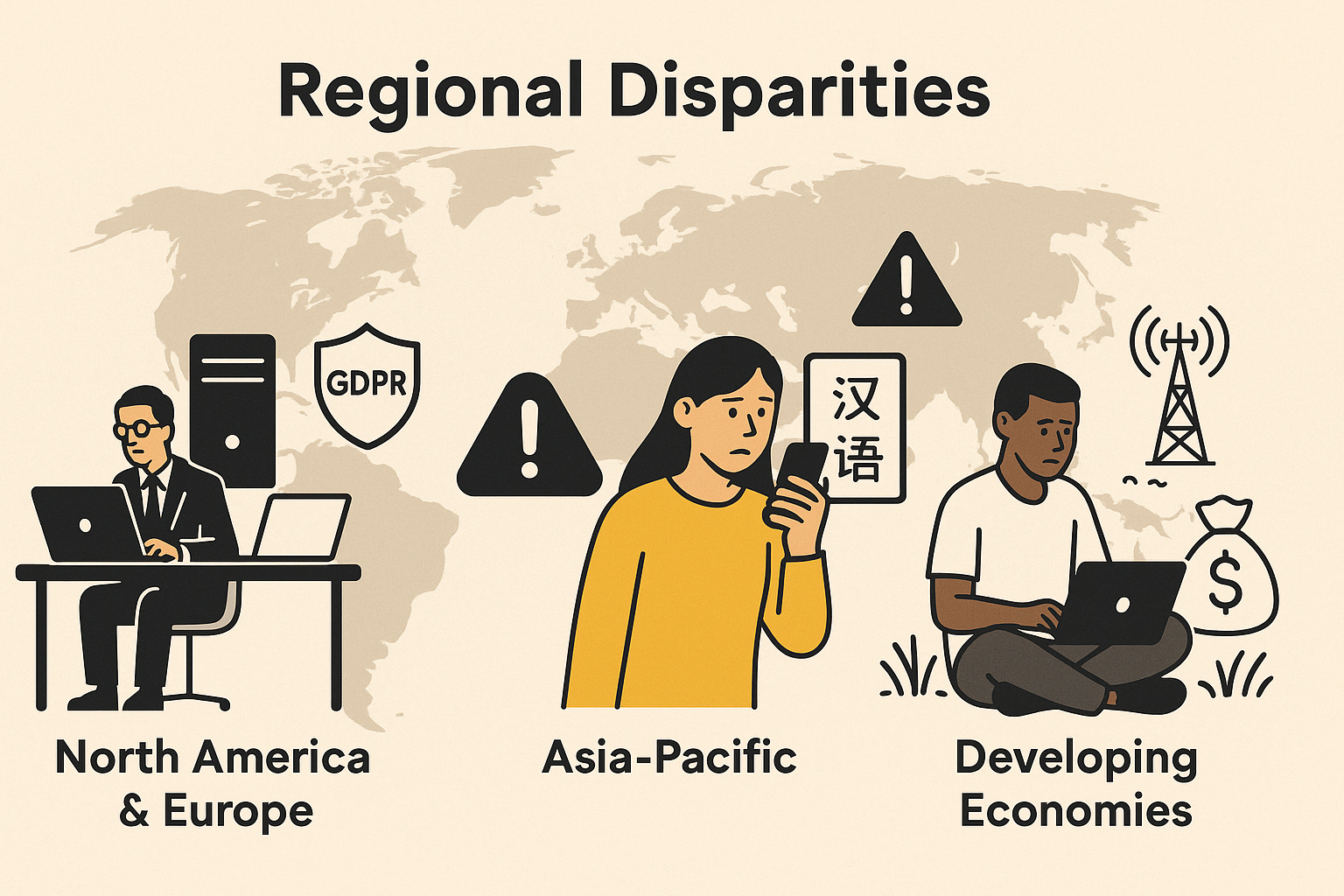
6.1 North America and Europe
These regions lead due to infrastructure and investment capacity. Yet, privacy regulations like GDPR in Europe may slow down cloud-based deployments.
6.2 Asia-Pacific
Often cited as the fastest-growing region, but the diversity of scripts (Chinese, Japanese, Hindi, Thai, etc.) poses huge technical challenges. Moreover, affordability gaps between urban and rural areas could slow diffusion.
6.3 Developing Economies
Infrastructure gaps (electricity, internet), lack of local-language datasets, and affordability issues limit uptake. The projected CAGR may not reflect these barriers.
7. Competition From Alternative Technologies
HWR doesn’t exist in isolation. Competing input technologies threaten to overshadow it:
Voice Recognition: Natural and fast, with growing multilingual support.
Predictive Typing & Virtual Keyboards: Faster and more intuitive on touchscreens.
Printed OCR: Already reliable for digitizing large volumes of printed documents.
Unless HWR systems achieve near-perfect accuracy and convenience, they risk being sidelined by faster, more user-friendly alternatives.
8. Future Outlook – A More Realistic View
The handwriting recognition market does have potential. But instead of universal adoption, the future likely involves:
Niche applications in medical records, legal archives, and government digitization projects.
High-value enterprise uses, rather than mass consumer adoption.
Slower growth in developing markets due to costs and infrastructure issues.
Gradual coexistence with voice and typing, rather than outright dominance.
By tempering expectations and addressing ethical, economic, and technical barriers, the market could mature sustainably. Without this realism, however, investors and innovators risk disappointment.
Conclusion
Handwriting recognition has been marketed as a transformative technology one that will digitize billions of handwritten records, boost efficiency, and bridge the gap between the analog and digital worlds. And while the promises are big, so are the problems.
Technical limitations, high costs, privacy concerns, cultural resistance, and competition from alternative technologies paint a less rosy picture than the growth forecasts suggest. In fact, unless these challenges are systematically addressed, the market risks plateauing long before achieving its ambitious projections.
The dark side of handwriting recognition is not about rejecting the technology altogether it is about recognizing its limits. Only by acknowledging these barriers can the industry recalibrate expectations, innovate responsibly, and deliver real value instead of inflated promises.
The handwriting recognition market may still have a future, but it won’t be the seamless, universal revolution that optimistic reports predict. It will be narrower, slower, and harder an evolution rather than a revolution.